Raja Karthikeya
“India has both the capacity and the responsibility to help restore peace and predictability in the region.”
Raja Karthikeya has spent over two decades in diplomacy and peacebuilding. With the United Nations he was part of the peace process in Afghanistan, managed grassroots efforts to protect civilians in Iraq during the counter-ISIS operations, and led the UN's Global Programme on Preventing Violent Extremism. He now leads West Asia studies at the Takshashila Institution.
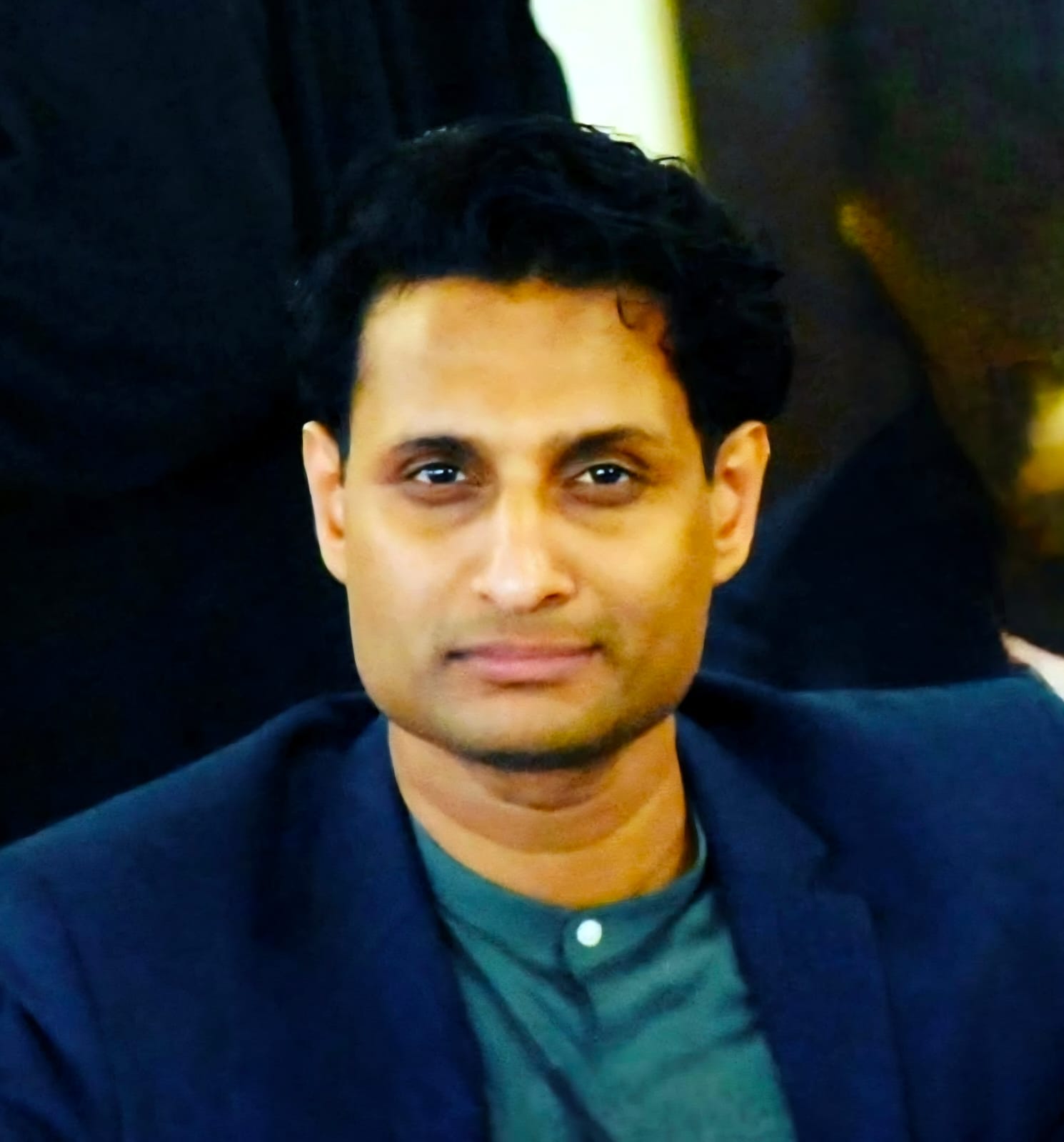
Not a commentator who reads about these places. A practitioner who was posted to them.
His analysis draws on six years with UN missions in Afghanistan and Iraq and on the Middle East desk of the UN Secretariat in New York. He now leads a course on West Asia at the Takshashila Institution.
From UN peace processes to the case for India as a peacemaker.
“A good leader is defined by courage.”Interview with the Dag Hammarskjöld Foundation, 2020
With the UN in Afghanistan he facilitated political dialogue, inter-ethnic trust-building and peace and reintegration processes; in Iraq he managed grassroots efforts to protect civilians during the counter-ISIS operations. He has been part of UN peace mediation and crisis response efforts on Iran and the question of Palestine, and was a penholder for the Secretary-General's Strategic Action Plan to address racism.
He has made the public case for India as a more active mediator since at least 2020, when he discussed India as an international mediator on Takshashila's All Things Policy. He returned to it in his April 2026 essay “Why India Doesn't Mediate (But Ought To)” and at Lamakaan in August 2026.
He went to both ends of the earth to make an argument about this one.
“I found that political conflicts were being worsened by climate change.”To YourStory, January 2018
Serving with the UN in Afghanistan and Iraq, he came to see climate change as a driver of conflict, and concluded that India, “a microcosm of the world”, risked facing many such crises.
So in July 2017 he crossed the Arctic circle near Svalbard, and in 2018 sailed from Ushuaia across the Drake Passage to the Antarctic Peninsula with an international team led by Sir Robert Swan. His aim was to raise awareness of climate change's impact on farmers and the need for climate adaptation, and to take what he saw to Indian schools and colleges, “so that we are prepared, well adapted and hopefully able to slow down climate change”. The expedition was crowdfunded, raising ₹9.36 lakh against a ₹7 lakh target.
He reads the national anthem as a rebellion in verse.
“It amounts to declaring that those we elect to govern us are one among us, not above us.”On Jana Gana Mana, Deccan Chronicle, January 2022
The third strand is the one closest to home. In his Deccan Chronicle column on Jana Gana Mana he argues that the anthem envisions India “as a fabric – with its peoples as the warp and weft”, and that its spirit “rejects placing any individual above the citizens”. Georgetown's citation describes a career driven by a desire to realise “a world where pluralism thrives and in which there is equality of opportunity for all”.
In 2021, during the Delta wave, he founded Project Madad, a group of doctors and professionals from India and the diaspora. He conceptualised and rolled out what Georgetown's citation calls the first ever real-time map of hospital beds for public health emergencies in India. The group trained over 1,500 rural healthcare workers and made Rajannapet in Telangana a COVID-resilient village; Nepal, Maharashtra and Uttarakhand expressed interest in replicating the model.
Watch him make the argument.
Three recent appearances, each opening in a new tab.
Fourteen places, from the Andaman islands to the Antarctic Peninsula.
How the three strands grew out of each other.
What he speaks about.
His writing, talks and interviews, in one place.
West Asia Scroll
His monthly newsletter, launched in June 2026, “will help you make sense of the news, and discover the unseen layers to developments in the region.”
West Asia: Crossroads in Conflict
He leads this five-week online course at the Takshashila Institution: fifteen hours of live instruction on Saturday mornings.
of Time — · —
The analyst's byline and the writer's are the same person.
The Catapult of Time is his first volume of poetry. Lamakaan, where he read from it in Hyderabad in 2024, described it as presenting “30 years of his reflections and reactions to a world in turmoil”. Georgetown's citation describes him as the author of an anthology of poetry in English, French and Telugu.
Bring him into the room.
Available for keynotes, panels, university lectures, editorial commissions and background briefings on West Asia, mediation, climate security and multilateral reform. His commentary on West Asia has been featured by the BBC, Times of India, Zee News, The Hindu and ETV Bharat.